
Périgord
Grand Tour
France

April 24, 2025 – may 2, 2025
Do you also want to discover the beautiful Périgord with us?
Click here for the next travel date:
Grand Périgord – Dordogne Tour
Southwest of France
Your Front Desk Team
Tour Guide: Monika Gründhammer
Driver: Markus Ruef
Itinerary:
Day 1: From Tirol, we traveled to Bern, Lausanne, then to Montreux and Évian-les-Bains
Day 2: We continue to Geneva, Annecy, and then to Clermont-Ferrand
Day 3: City tour of Clermont-Ferrand, then to the garden Jardins du Manoir d’Eyrignac and on to Sarlat
Day 4: Visit to Les Eyzies with the Cro-Magnon Man, then to Lascaux IV Cave and the village of Montignac, Château Les Milandes of Josephine Baker
Day 5: Visit to the extraordinary cave Gouffre de Padirac, the pilgrim village of Rocamadour with the beautiful viewpoint Belvedere, then on to Domme where the tourist train awaited us.
Day 6: Visit to the city of Sarlat, then to the Gardens of Marqueyssac, then to Beynac Castle with the bedroom of Richard the Lionheart, and finally, the beautiful boat trip in La Roque-Gageac
Day 7: Visit to Lyon
Day 8: Drive to Chamonix, then to Lake Maggiore
Day 9: Drive to Garda to Lake Garda, lunch, and then return journey to Tirol


Welcome to our Grand Journey through Switzerland, France, and Italy

Outward journey: 1,256 km / approx. 15h pure driving time from Wörgl to Sarlat with two stopovers

Excursions in Périgord: 242 km

Total kilometers: 2,862 km
Our grand tour through Switzerland, France, and Italy began cloudy. However, the further west we traveled, the brighter and clearer it became. Bern was our first stop and definitely worth a visit.
Bern
Bern is the capital of Switzerland and the canton of Bern. It is among the cities with the highest quality of life worldwide. No wonder, as Bern is clean, rich in history, and simply a beautiful city.
The Old Town of Bern is located in the city center on a rock, enclosed on three sides. The beautiful city is surrounded by the breathtaking aquamarine waters of the Aare. The best part is that it has preserved its medieval character and is a UNESCO World Heritage site.

In the center of Bern’s Old Town stands a beautiful structure called the Zytglogge Tower. This spectacular building was once the western gate of the city of Bern and was once used as a prison. Today, it is a landmark of the city and a popular attraction.
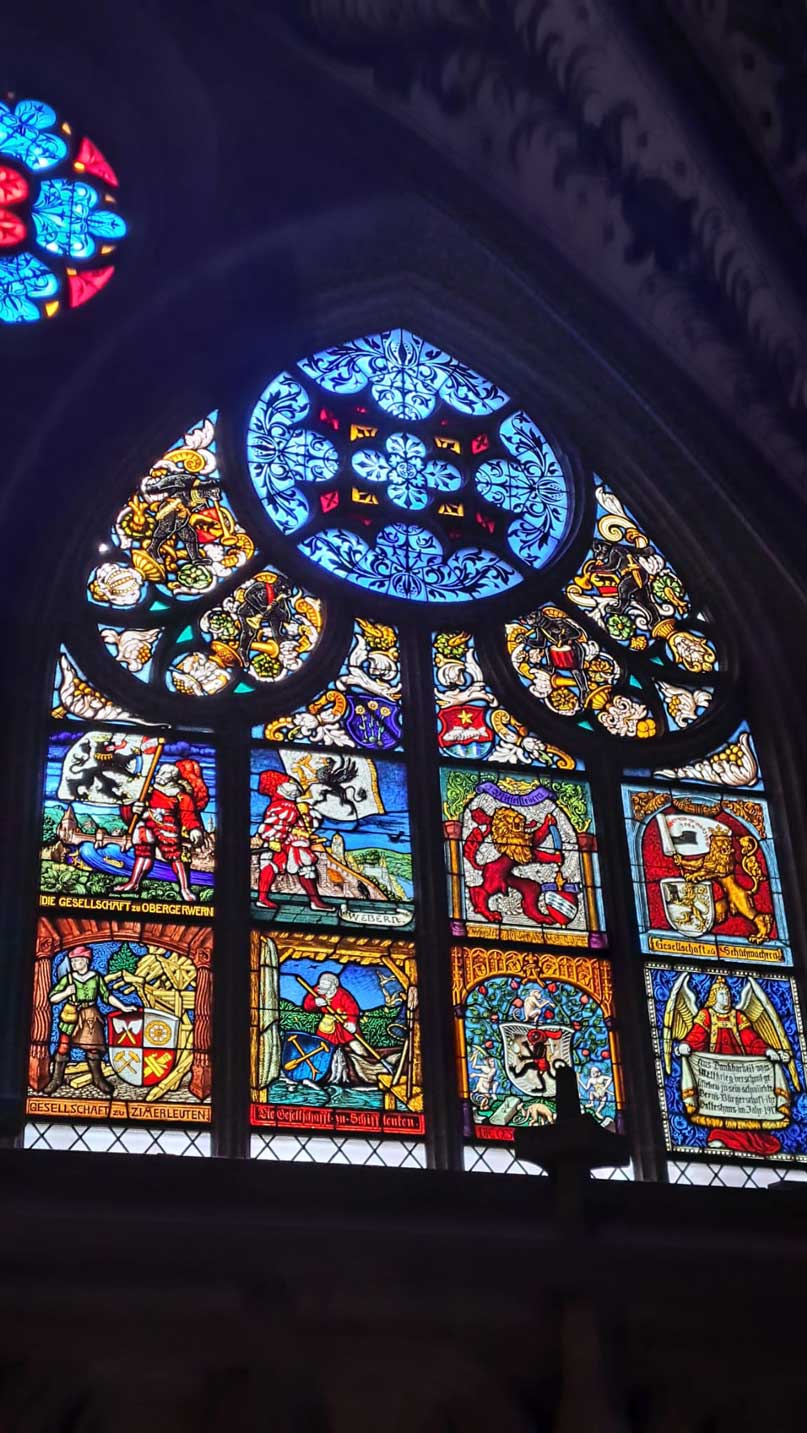
The Minster, as the locals call it, is a major attraction in Bern. Bern’s Cathedral is the largest church building in Switzerland, making it an impressive sight. The building itself is very beautiful and an excellent example of late Gothic style architecture.
The Minster is quite old, as construction began in 1421, but it took several years for the landmark to be completed. The church was only completed 400 years later.

Particularly impressive were the wonderful colored stained-glass windows, which I have never seen anywhere else like them.
We explore the city of Bern with approx. 146,000 inhabitants. In the picture, you can see the Zytglogge Tower in the background and one of my guests in the foreground in front of the fountain. 🙂
Bern is located directly on the Aare… the Aare is the longest river flowing entirely within Switzerland. Its total length is 288 km.


Our Next Stop: Montreux
Montreux is known for the Freddie Mercury Statue. Fans and admirers of the singer of the group Queen travel to Montreux from all over the world. They gather in crowds before the statue and pay tribute to their idol with various homages: flowers, often in Freddie’s favorite color yellow, poems, drawings, photos, and many other objects accumulate at the foot of the statue.
We stayed overnight in beautiful Évian–les–Bains before continuing the next day to Geneva, Annecy, and Clermont–Ferrand.

Freddie Mercury

Lake Geneva with flowers in Freddie’s favorite color yellow
Geneva
Geneva has become known, among other things, for the Flower Clock, the Jet d’Eau, and for the assassination of Sissi.
In the heart of the English Garden, you can discover the 12,000 varieties of flowers that make up the Flower Clock, created in 1955. Its motifs and floral arrangements are changed seasonally to the delight of visitors. In addition to its decorative value, the Flower Clock also tells time with Swiss precision: the displayed time is transmitted by radio. Another important detail: its second hand, with a length of 2.5 meters, is the largest in the world!

Initially, the extent of the attack was not recognized: “Sisi” died an almost incidental death, which befell her about an hour and a half after the assassination in her suite at the “Hotel Beau Rivage”. In that house, where in October 1987, the Minister-President of the German state of Schleswig-Holstein, Uwe Barschel, was also found dead. In contrast to the mysterious theories surrounding Barschel’s death, everything is clear in the “Sisi case”: It was murder – but essentially just a temporary anticipation of the imminent end, for which the 60–year-old Empress of Austria and Queen of Hungary was already preparing.

Sissi died in this hotel on September 10, 1898

The Jet d'Eau
Originally only a few meters high, the fountain served as a pressure relief valve, functioning as a water tower for the 1885-built pressurized water pipeline of the Forces Motrices de la Coulouvrenière power plant, which the Geneva jewelers used to operate their machines. This absorbed unwanted peaks during work interruptions and indicated overpressure.
In 1891, the City of Geneva decided to move the large fountain into the lake basin as a tourist landmark and to increase the water pressure. In 1951, the current system was built, which has two pumps with a total output of approx. 1000 kW. It expels 500 liters of lake water per second at a speed of 200 km/h.

Jet d’Eau

View of Lake Geneva
The stop in Annecy was also particularly enjoyable for all of us:


Clermont-Ferrand
The next day, we went for a city tour of Clermont-Ferrand, then on to the garden Jardins du Manoir d’Eyrignac and further to Sarlat, where we stayed for 4 nights.
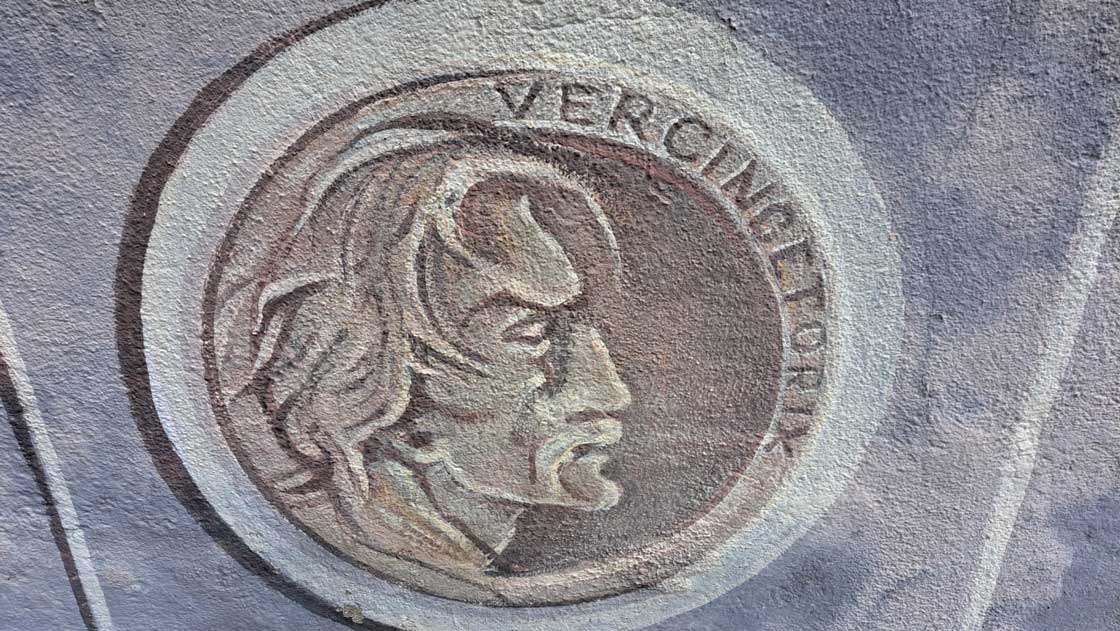
Clermont–Ferrand is also a beautiful city with many great churches, squares, and cafes… I cannot capture all impressions here, but our beautiful group photo in front of the statue of Vercingetorix certainly deserves a mention.

Vercingetorix – Celtic Prince, Roman Enemy, French National Hero

Moni’s Hammertime Group in action!!!!
Also worth mentioning are the two cathedrals in Clermont–Ferrand. The Cathedral of Notre–Dame de l’Assomption is the Gothic, Roman Catholic episcopal church of the Archdiocese of Clermont, located in the center of the city of Clermont-Ferrand. It was built starting in 1262, following the model of Gothic cathedrals in Île-de-France. The characteristic building material is black Volvic stone.

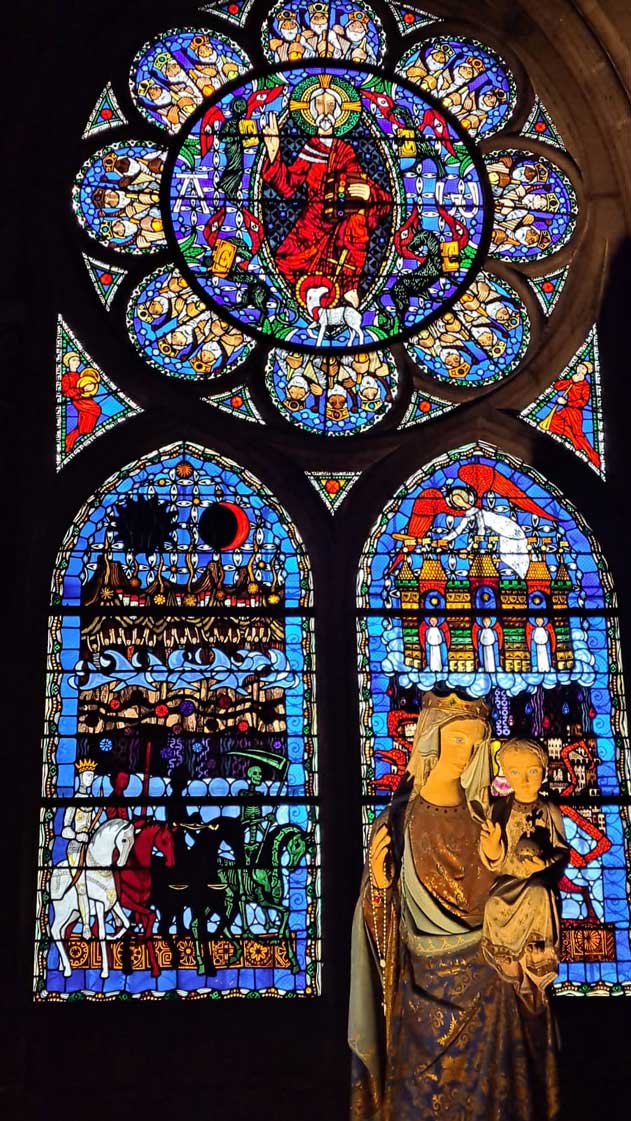
The Church of Notre-Dame-du-Port is representative of the regional Auvergnat Romanesque architectural school and the oldest of the preserved churches of this school. The former Romanesque Cathedral of Clermont-Ferrand would also belong to it as its mother church, had it not had to make way for a new Gothic building.
Since 1998, the church has been part of the World Heritage Routes of Santiago de Compostela in France.


Characteristic of a Corinthian column are the decorative, bell-shaped capital with volutes, two rows of acanthus leaves, and an ornate cornice. Often, the column is fluted (provided with vertical grooves).
Development of the Corinthian Column: It originated in the 5th century BC in Greece and reached its peak in Roman architecture.
Lascaux Cave
The next day, we went to an absolute highlight, namely the Lascaux Cave, and had a break in Montignac.
The Lascaux Cave is a famous prehistoric cave painting monument located in Montignac in the Dordogne department in France. It houses some of the most impressive Paleolithic cave paintings in the world, dating from approximately 17,000 to 15,000 BC. The cave has been a UNESCO World Heritage site since 1979.
The Lascaux Caves were discovered in 1940 by four teenagers exploring the area. What they found inside the caves was absolutely breathtaking: Wall paintings, approximately 17,000 years old, depicting a variety of animals such as bison, horses, deer, and many others.
It is difficult to say exactly how old the paintings are. Unfortunately, the original cave is no longer accessible to the public due to mold infestation, but an incredible, faithful replica left us all speechless. I can only recommend everyone to visit the cave. Absolutely worth seeing…

And off we go…our cave guide was excellent!!! All guests were thrilled by the vivid explanations. 🙂


A partially faithful replica

*Montignac, where we enjoyed our lunch break
* The municipality lies on the banks of the river Vézère. Montignac–Lascaux was already settled in the Paleolithic era and was colonized in antiquity by the Romans.
Château Des Milandes
The next highlight was not long in coming: Château des Milandes
The castle was built in 1489 by François de Caumont, Count of Castelnaud, at the initiative of his wife Claude de Cardaillac. He also owned the fortresses of Castelnaud and Berbiguières, between which the castle was situated. Until 1535, the castle remained the main residence of this family. In the French Revolution, it was expropriated. Afterwards, it passed through several hands, but was not significantly changed.
However, it became famous through the purchase by Josephine Baker:
In 1938, the castle was first rented by Josephine Baker and then purchased in 1947. She arranged for electricity and water connections in the castle and in the adjacent village of Milandes, making it the first village in the Périgord with these amenities. Josephine Baker also commissioned a complete renovation of the interior.
Today, the castle is open to the public for tourists. A birds of prey flight show awaits guests, and the interior of the castle and the church can be visited. The garden and a nice café are also available to guests.


Gouffre De Padirac
The next day, we went deep underground, namely to the mysterious Gouffre de Padirac, better known as the “Padirac Chasm.”
Come along and descend with us into one of the most interesting abysses in France…
No sooner said than done, we naturally didn’t need to be told twice. The headsets were quickly distributed and we were off on foot or by elevator, individually selectable depending on fitness level. I and Christine were the last and so everyone could explore the interesting cave system individually at their own pace.
A must-see in the beautiful Perigord! — but see for yourself, the photos speak for themselves!


Rocamadour
After the coffee break, we continued to Rocamadour.
And Rocamadour is a so-called Grand Site de France (major landmark of France), which we naturally did not miss. The city is built on 3 levels. First of all, we went to a beautiful vantage point, where we could take fantastic photos. Afterwards, we took the elevator down and explored the middle level of the city, which also houses the numerous churches including the Black Madonna. Then we climbed down the last steps into the actual village with numerous shops and cafés. We then went back up to the very top by elevator. The rock city is incredibly worth seeing and the church with the Black Madonna is a must see.


Domme
After a wonderful drive through the scenic Perigord, we reached Domme.
Domme is a bastide, i.e. a small, fortified town with a regular layout, which was newly built from the ground up in southwestern France in the Middle Ages. Typically, the streets of Domme intersect at right angles, the squares are square, there is a large market hall and the town is fortified. Philip III, called “the Bold“, is the founder of Domme.
Domme is remarkably well preserved, the city walls and large gates that once surrounded the city are still largely present. The stone houses have a flair like nowhere else. A unique architectural heritage, including the city walls and the Porte des Tours, where the imprisoned Templars made engravings that can still be seen today.
We discovered Domme comfortably by tourist train and it was simply fantastic. Great view down into the beautiful landscape included.

The insanely great view from the city down to the Dordogne River

Let’s go…the train took us comfortably through the well-preserved old town of Domme

Sarlat
One day more beautiful than the other and so the next day, right after breakfast, we went to the city of Sarlat. The city was founded in the 9th century around a monastery and quickly developed into a prosperous city. Its current appearance is characterized by the Renaissance buildings of the 13th and 14th centuries.
In recent decades, Sarlat has been completely restored and, along with Carcassone, is one of the most beautiful examples of a medieval city. With the construction of the departmental road “La Traverse” in 1837, which runs through the town, the development of Sarlat into a modern city began, much to the pride of its citizens. More recently, the cityscape was redesigned according to the Malraux Law of 1962 and Sarlat was awarded the title “City of Art and History.”
And that is how we perceived the city. Beautiful restored houses from bygone eras. Great squares, churches and cafés made our hearts beat faster and a special highlight was the Lantern of the Dead. The ten meter high, cone-shaped lantern of the dead was erected in honor of Saint Bernard, who stayed in Sarlat in 1147.
Regarding the first picture: The “Goose Square” in Sarlat, officially called “Place du Marché aux Oies“, is a central square in the heart of the old town, where a goose market used to take place. It is known for its charming buildings, including the Gisson manor and the Maison de la Boétie. A bronze goose sculpture marks the square.


Gardens of Marqueyssac
After we were able to explore Sarlat extensively, we continued to the Gardens of Marqueyssac. An impressive garden that was laid out high up on a rock plateau. Magnificent views awaited us and also the king of the feathered creatures, the peacock, was not long in coming. Coffee break included!!!


Beynac Fortress
After leaving the Gardens of Marqueyssac behind, we went to the famous, medieval Beynac Fortress. Today, it is one of the best-preserved castles in France. Built in the 12th century as a mere keep on a 150 meter high and difficult to access limestone plateau above the Dordogne, the complex served as a strategically optimal observation and defense post.
After its construction by Maynard de Beynac, Richard the Lionheart seized the castle in 1194 in his capacity as Duke of Aquitaine for a short time and entrusted it to the royal governor Marchadier. After the death of Richard in 1199, the fortification returned to the possession of the local nobility.
The drive up to the castle alone was extremely exciting and once at the top, our guests enjoyed the breathtaking view.


La Roque-Gageac
Last but not least, we then went to La Roque-Gageac.
La Roque-Gageac lies as if painted in the Périgord Noir at the foot of a south-facing cliff. Its golden yellow houses with their roofs of slate or brown tiles are reflected in the waters of the Dordogne. On its banks, the descendants of those gabares, which transported wine and walnuts in the 19th century, are still moored today.
The village consists of only a few rows of houses. Much had to be rebuilt after the devastating disaster of the winter of 1957. On January 17, 2500 cubic meters of limestone rock crashed onto the village below.
When the rescue workers intervened, they recovered three bodies from under the rubble. The subsequent safety work on the rocks lasted ten years. In January 2010, part of the ceiling of the cave fort collapsed. 750 tons of boulders had to be removed. The construction work cost 1.6 million euros.
The fortress in the rock: In the rocks that rise above the Dordogne village, remains of a fortress from the 12th century can be seen. The bishops from Sarlat found refuge there during the religious wars.
We, on the other hand, boarded a ship and enjoyed the fantastic views from the water in the best weather. 🙂


Lyon
After four great and eventful days in the Perigord, we finally headed back towards home, but three beautiful days with a stop in Lyon, Chamonix awaited us. Lago Maggiore and at the end we ended our trip with a lunch on Lake Garda.
We all particularly liked Lyon. The city with its numerous churches and squares is simply worth a visit.
A highlight to visit is the Notre-Dame de Fourvière. It is a Roman Catholic votive and pilgrimage church on the Fourvière hill in Lyon. It was built from 1872 and consecrated in 1896. The following year, it was elevated to the rank of Basilica minor. Since 1998, it has been a UNESCO World Heritage Site together with other historical sites in Lyon.
The building shows the historicist–eclectic style typical of French sacred buildings of this period with great attention to decorative detail. Romanesque and Byzantine architectural forms predominate.
The Ionic column is less bulky and has a much narrower shaft. Its most distinctive feature is the capital, whose characteristic snail-shaped twisted volutes immediately catch the eye. The slender Ionic column necessarily requires marble as a building material.


Also to be seen in Lyon is the Fontaine Bartholdi. The fountain is located on the Place des Terreaux in the center of Lyon. It was designed in 1892 by the sculptor Frédéric-Auguste Bartholdi. Bartholdi also began designing the Statue of Liberty in 1870. An artist of a very special kind.

The sea goddess Amphitrite sits on the triumphal chariot with two children holding amphorae.
Continue Journey
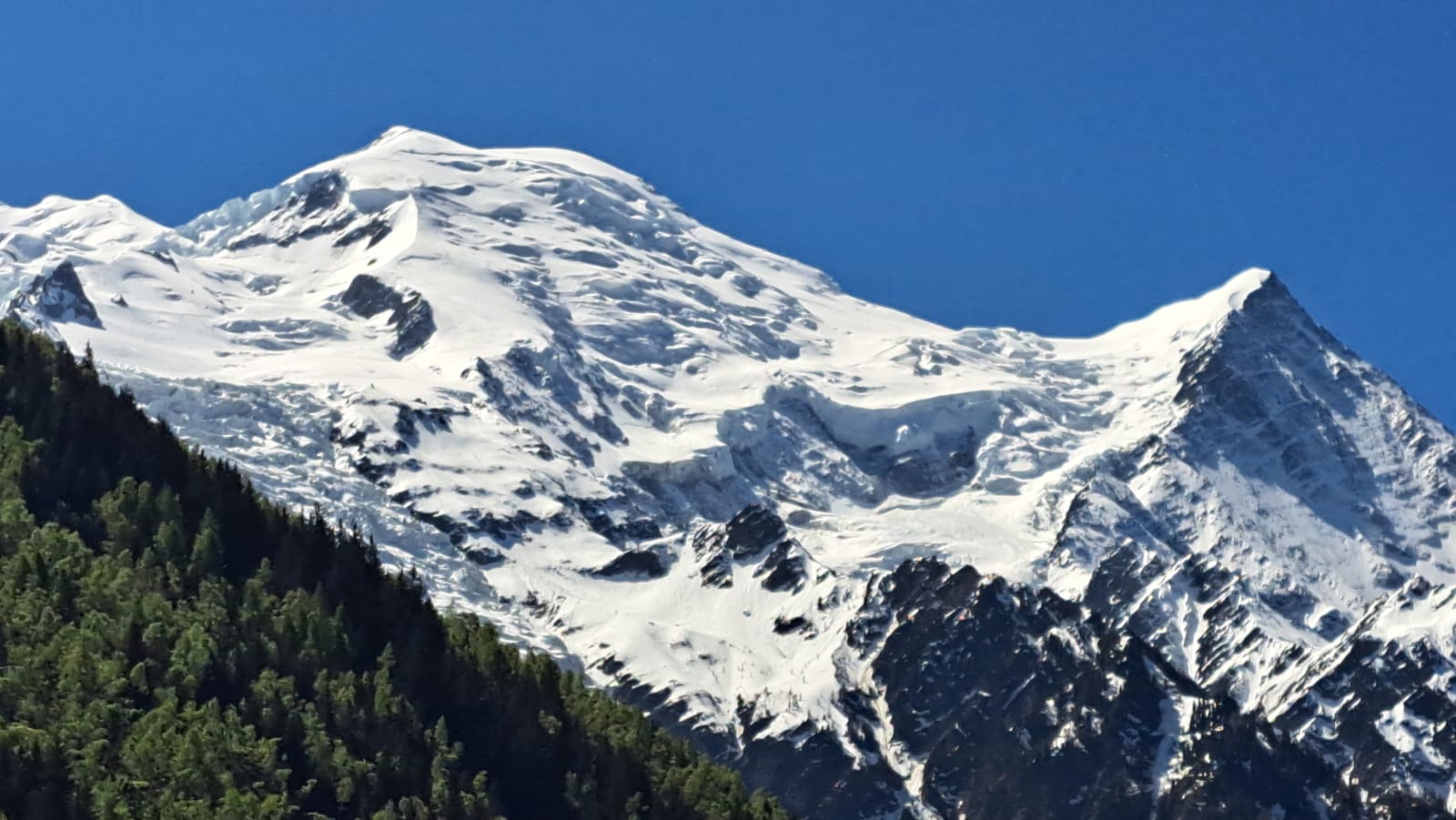
We stayed at the Holiday Inn in Lyon before continuing refreshed to Chamonix the next day. There, too, we were greeted by a cloudless sky with views of Mont Blanc and numerous paragliders in the air. A sight for the gods, but see for yourselves.
Our journey continued through the beautiful Aosta Valley to Lago Maggiore, where we checked into the Hotel Regina Palace. After checking in, we boarded the boat with Capitano Piermario, where we ended our day with water and wine. 🙂


Hotel Regina Palace
Our Hotel Regina Palace is located in a majestic Art Nouveau building with an elegant, classical-style interior and a large garden with a pool. We stayed directly on the shore of Lago Maggiore in Stresa. The rooms and common lounges are all furnished with antique furniture, carpets, and historic chandeliers, conveying a sense of history and elegance.
A crowning conclusion to our fantastic grand Perigord-Dordogne tour!!!


Thank You!
On behalf of Christian Reisen, I would like to sincerely thank all my guests and our driver Markus Ruef. We were all a great team together, and I look forward to welcoming you again soon when it’s time for:
Front Desk to Back Office, please report…

Thank You!
On behalf of Christian Reisen, I would like to sincerely thank all my guests and our driver Markus Ruef. We were all a great team together, and I look forward to welcoming you again soon when it’s time for:
Front Desk to Back Office, please report…

Sincerely, your Tour Guide Monique and Driver Marküse!
Would You also like to Discover the Beautiful Perigord with Us?
Click here for the next travel date!
More Impressions:


All Trips
Here you can find all my trips and posts – feel free to browse!
Alpine Crossing DE-AT-IT
Alpine Crossing Bavaria, North & South TyrolGermany, Austria, Italy27.07 - 03.08.25Would you also like to cross the Alps on foot? From Bavaria via North Tyrol to South Tyrol! Alpine crossing Tegernsee – Sterzing The "easy" Alpine crossing with hotel comfort and...

Bergdoktor & Krimml Waterfalls
Bergdoktor & Krimml WaterfallsAustriaMay 16 & 17, 2025Here you can find the next Bergdoktor tour from Vöhringer Reisen:Following in the Footsteps of the Bergdoktor & Krimml Waterfall Round Trip With Austria Guide: Monika Gründhammer Driver: Eberhard...

Lago Maggiore
Lago Maggiore Adventure TripItaly10.05 - 13.05.25You can find more beautiful trips at:Lago Maggiore By train through the picturesque valleys from Domodossola to LocarnoAround 1440, the Borromeo family acquired two castles on Lago Maggiore and were elevated to the rank...

